

Pizza From Store-Bought Dough (Neapolitan-Style Pizza)
Pizza from store-bought dough can produce incredible results when handled correctly. With the right technique, even packaged dough can bake into a beautifully blistered Neapolitan-style pizza with a thin, soft center and airy crust.
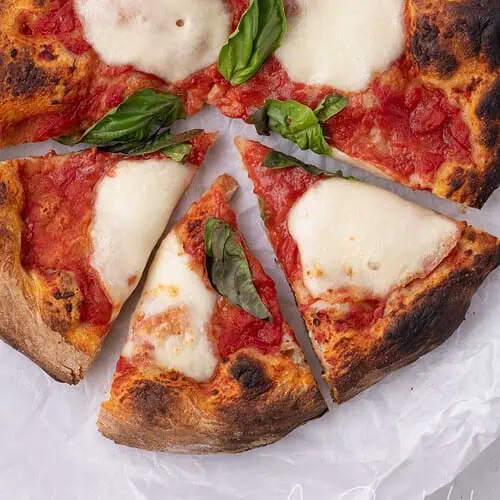
This Margherita pizza recipe builds on the stretching technique in my guide to making the ultimate pizza from store-bought dough, where I show you how to handle and shape the dough properly. Here, the focus is on turning that technique into a classic Margherita pizza with a Neapolitan-style crust, using crushed tomatoes, fresh mozzarella, and basil.
The result is a simple, elegant pizza that highlights just a few high-quality ingredients.
This recipe has been kitchen-tested to ensure consistent, reliable results.
Can You Really Make a Neapolitan-Style Pizza With Store Bought Dough?
Yes. Pizza from store-bought dough can produce excellent Neapolitan-style pizza when stretched gently by hand (not a rolling pin!) and baked at very high heat on a preheated pizza stone or in a cast-iron pan. Because the dough is stretched gently and baked quickly, the center remains soft and flexible while the outer rim becomes light and airy.
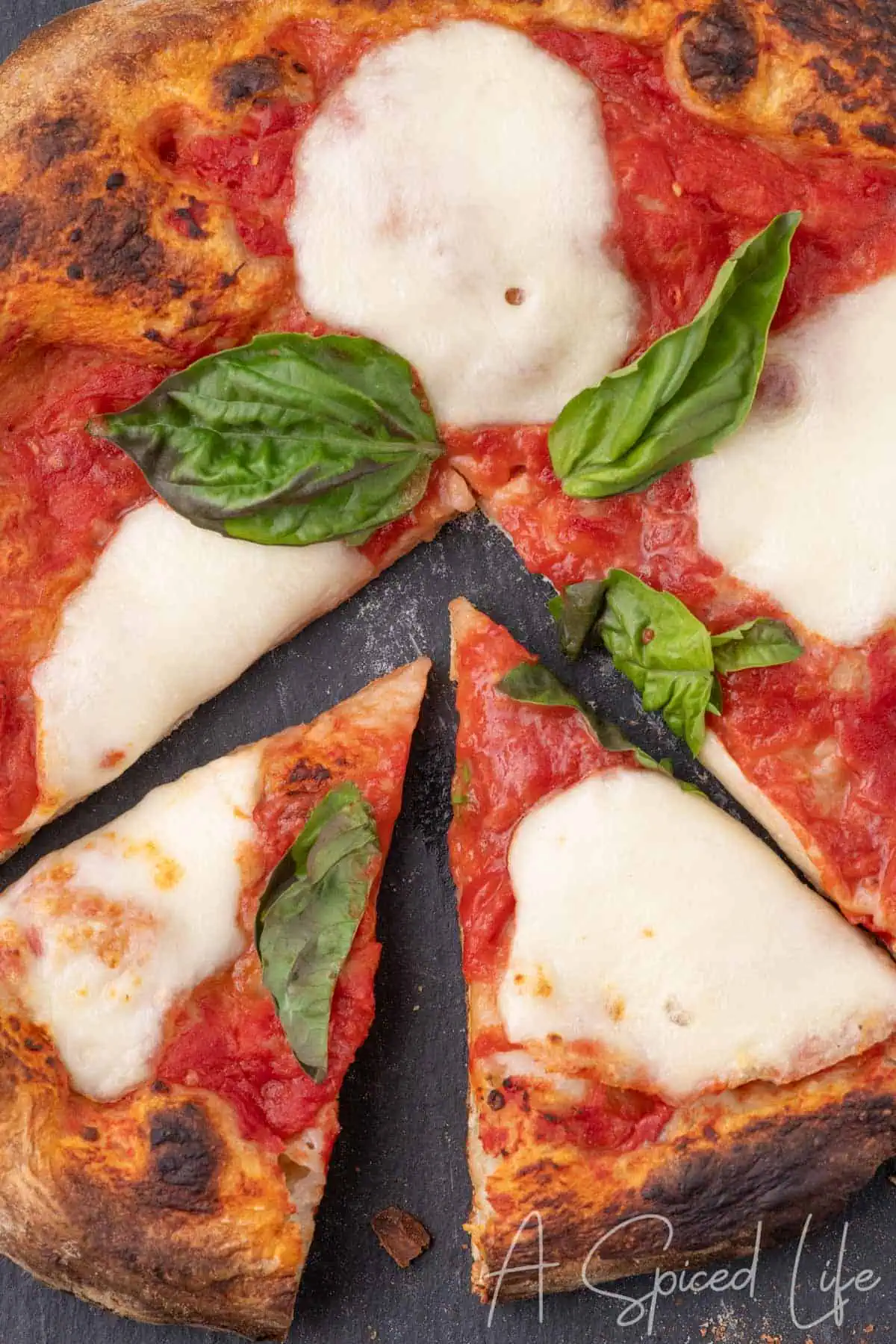
What Is The Difference Between Neapolitan Pizza and Margherita Pizza?
Neapolitan pizza refers to a style of pizza defined by its thin center, airy crust, and high-heat baking method. Margherita pizza is a specific topping combination made with tomato sauce, fresh mozzarella, basil, and olive oil. Most Margherita pizzas are traditionally served on a Neapolitan-style crust, which is why the two are often confused.
Neapolitan pizza describes how the pizza is made, while Margherita pizza describes what goes on top of it.
Traditional Margherita pizza originated in Naples, Italy, and is known for its simple ingredients representing the colors of the Italian flag: red tomatoes, white mozzarella, and green basil.
Why You’ll Love This Recipe
- Turns basic store-bought pizza dough into a Neapolitan-style pizza
- Uses simple ingredients inspired by authentic Italian pizza
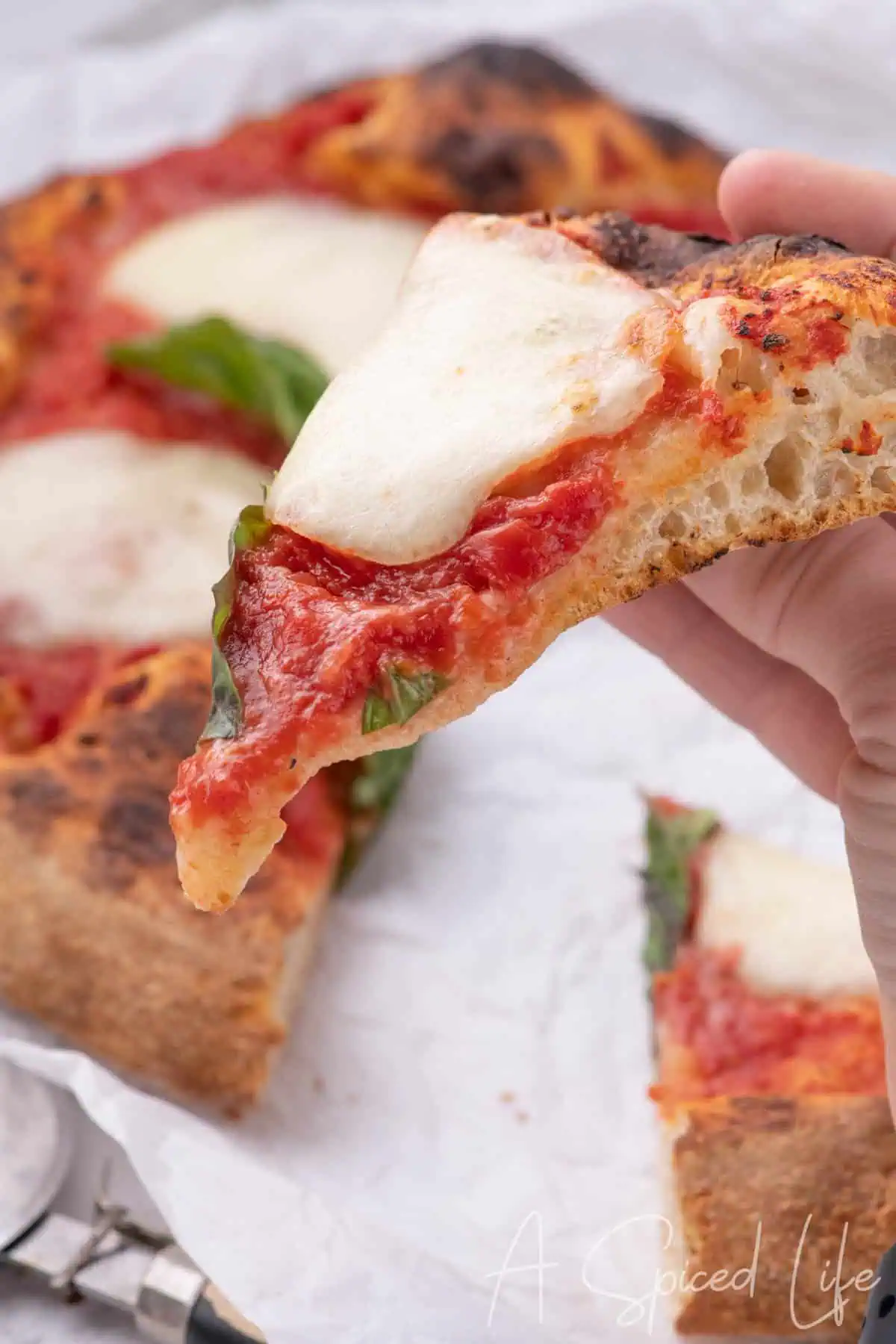
- Creates a thin center with a light, airy crust and crisp blistered edges, using my techniques
- Easy to make in a standard home oven, but still gives you that pizzeria-style pizza experience.
Why San Marzano Tomatoes Are Used For Margherita Pizza
Traditional Italian pizzas use San Marzano tomatoes because they are less acidic than many other canned tomatoes. They have a meatier texture and don’t create as much liquid as other varieties. Crushing them by hand allows some chunks to remain, making this more of an artisan (less manufactured-looking) pizza.
Table of Contents
- Can You Really Make a Neapolitan-Style Pizza With Store Bought Dough?
- What Is The Difference Between Neapolitan Pizza and Margherita Pizza?
- Why You’ll Love This Recipe
- Why San Marzano Tomatoes Are Used For Margherita Pizza
- Ingredients for Neapolitan Pizza from Store-Bought Dough
- How to Make Neopolitan-Style Pizza from Store-Bought Dough
- Why Does My Pizza Dough Keep Snapping Back When I Stretch It?
- Things to Know About Neapolitan-Style Pizza
- Expert Tips for Better Pizza at Home
- Make Ahead and Storage Info
- Recipe FAQs
- Delicious Starts Here
Ingredients for Neapolitan Pizza from Store-Bought Dough
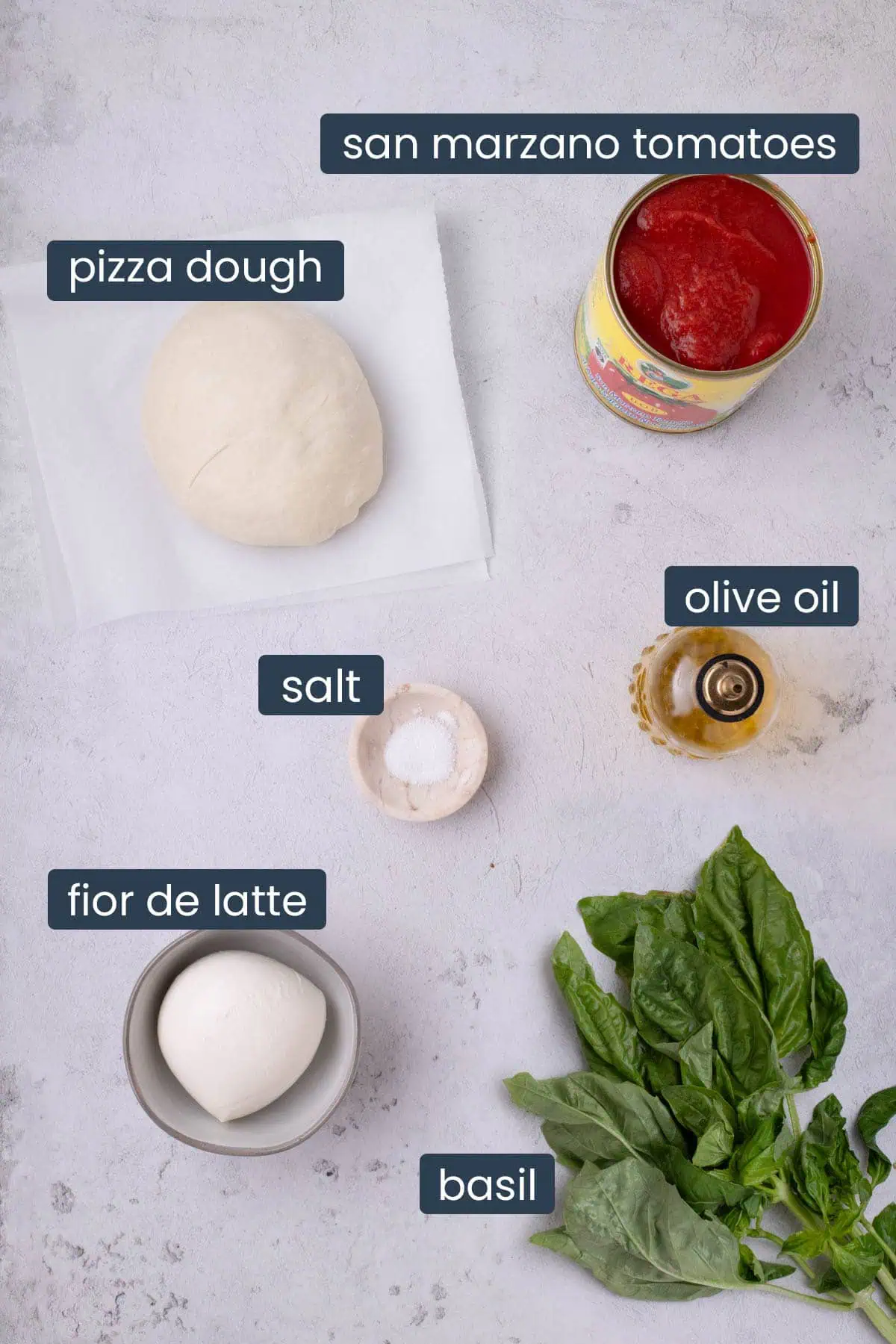
- Store-Bought Pizza Dough: Once baked, a 16-ounce ball will make a 12-14 inch pizza
- Canned San Marzano Tomatoes: They are less acidic than other varieties which balance well with the cheese. Look for the label DOP (Denominazione di Origine Protetta) which guarantees authenticity.
- Extra Virgin Olive Oil: Brushed along the edges of the crust to promote a browned, blistered texture like that from a pizza oven. *See note here about usage.
- Fresh Mozzarella: Fior di Latte or Mozzarella di Bufala are good options. Avoid the more liquid-centered Burrata.
- Fresh Basil: Added after the pizza has baked, so it stays vibrant green
Refer to the printable recipe card below for ingredient quantities and detailed instructions.
How to Make Neopolitan-Style Pizza from Store-Bought Dough
If you’re just getting started, begin with my full guide to pizza from store-bought dough, where I walk through the stretching technique and tips for achieving a crisp pizzeria-style crust as the base.
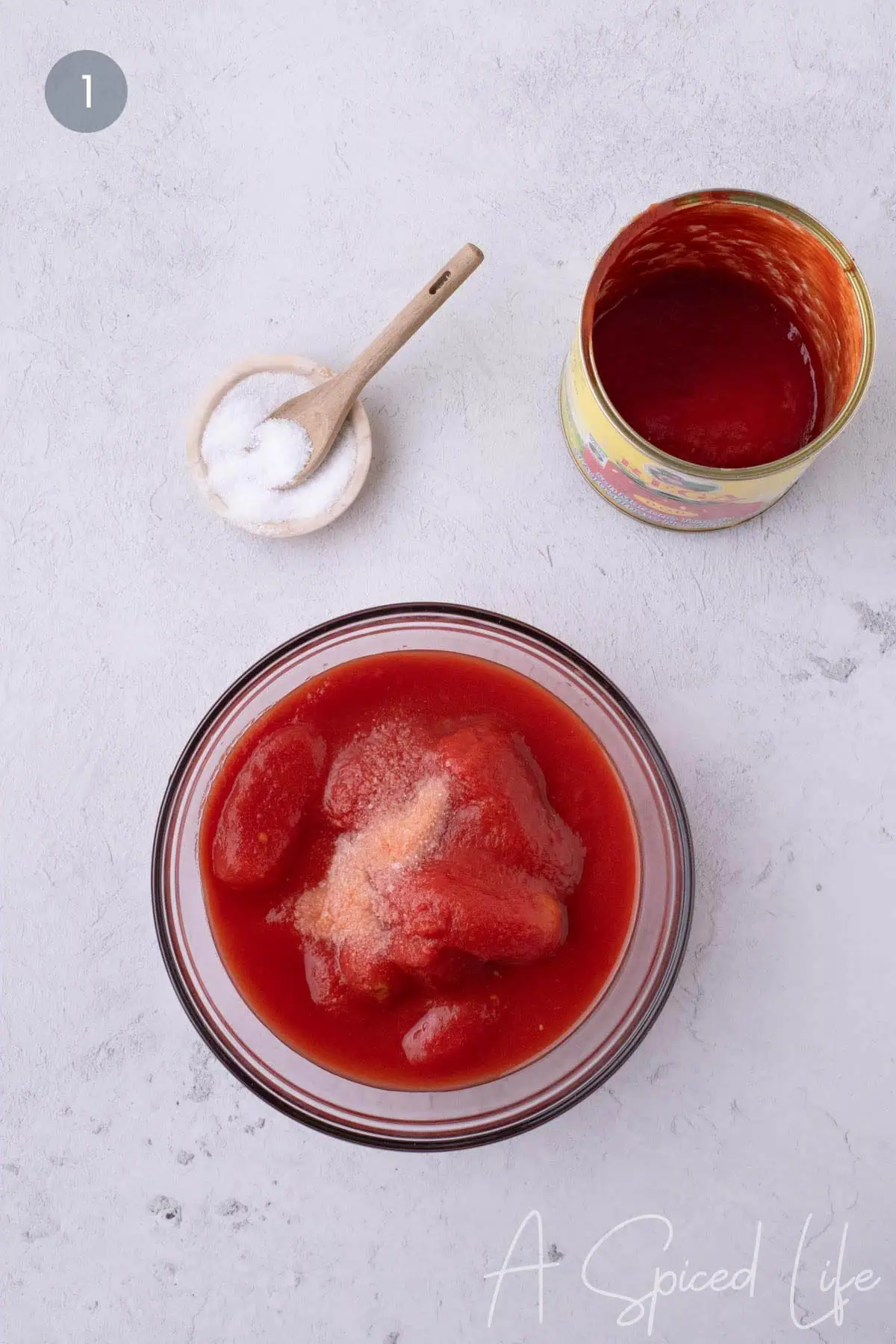
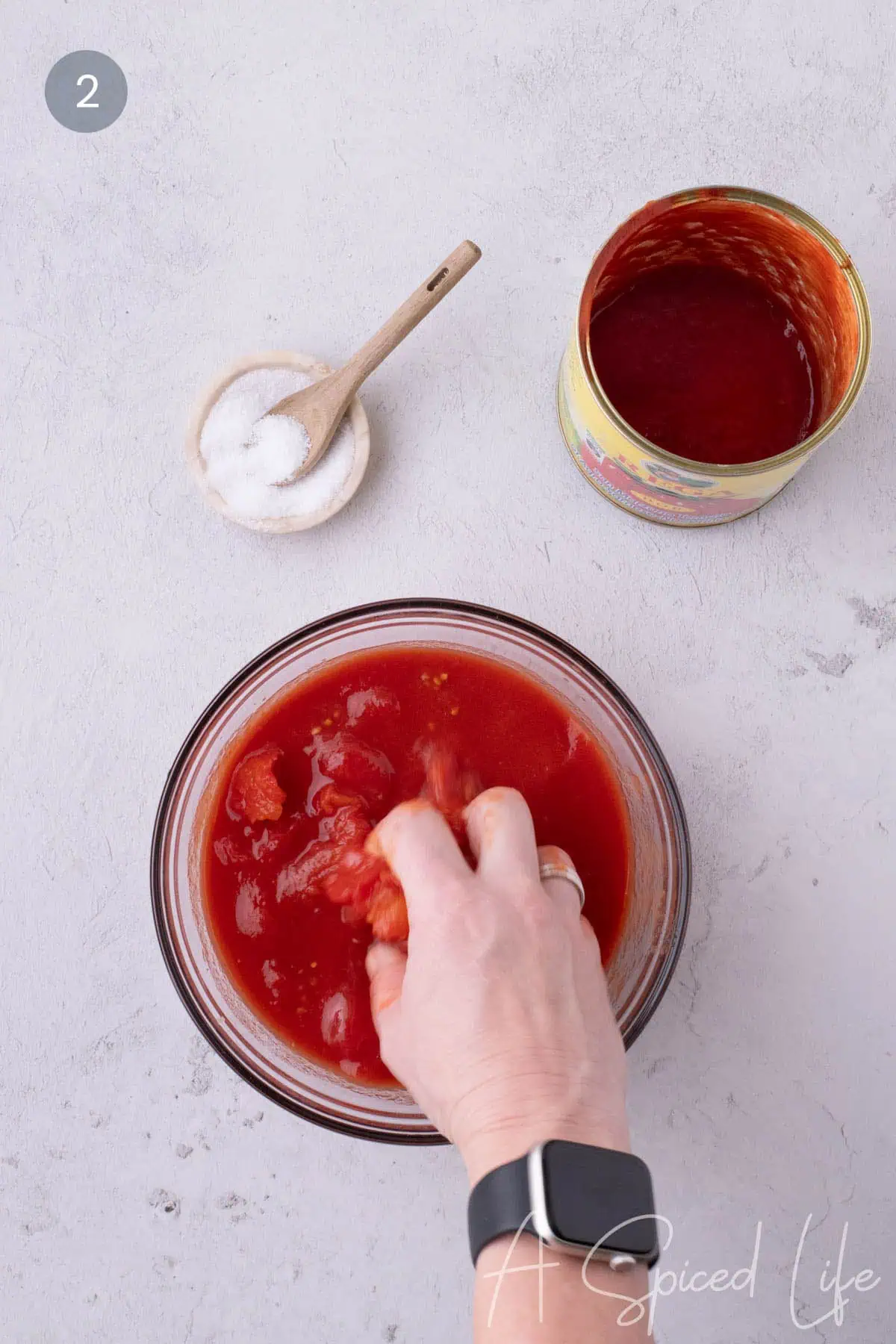
1. Empty the canned tomatoes and their juices into a bowl and add salt.
2. Gently crush the tomatoes by hand until the sauce is slightly chunky.
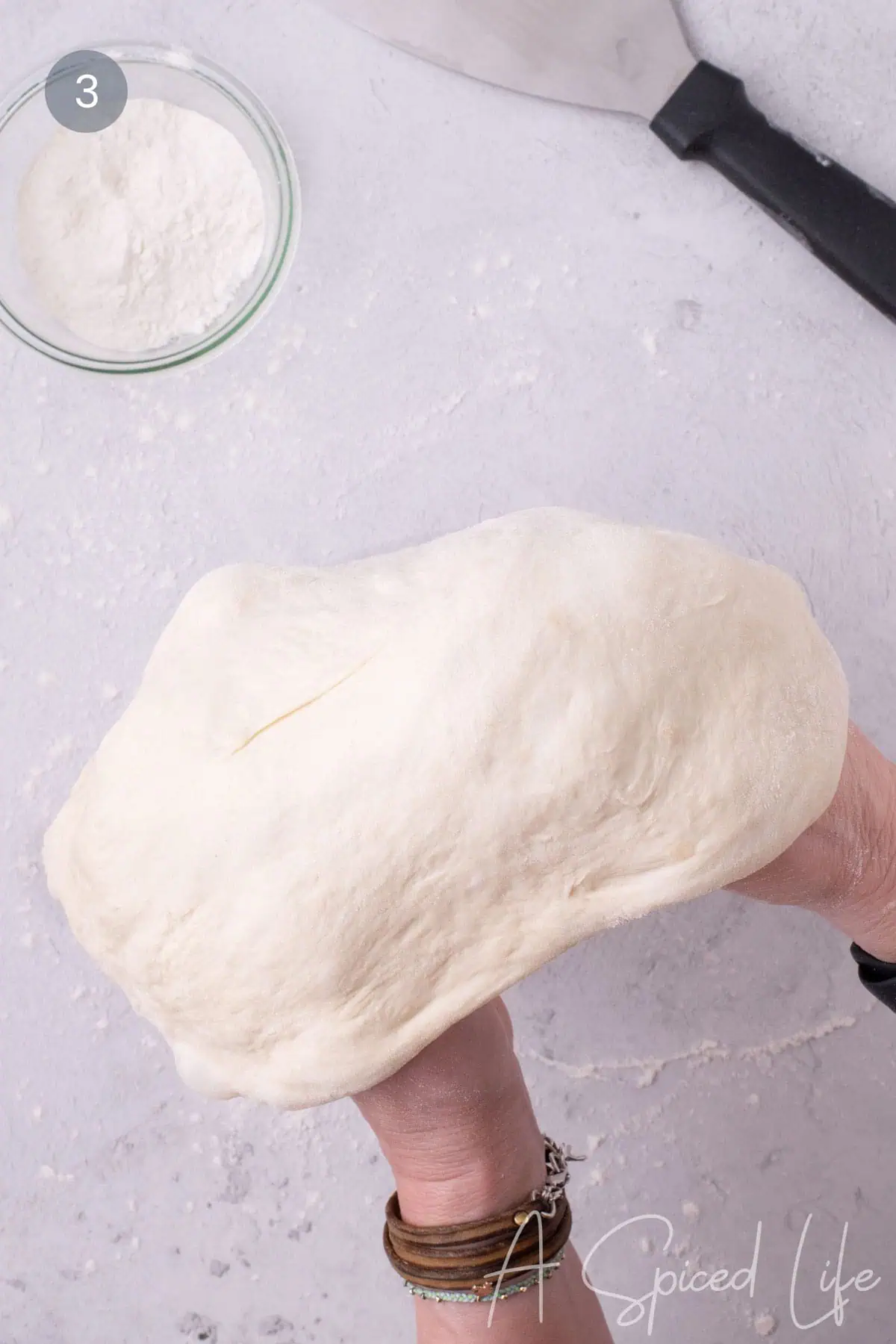
3. Stretch the pizza dough by hand using one of these two techniques to form a thin center and airy Neapolitan-style crust.
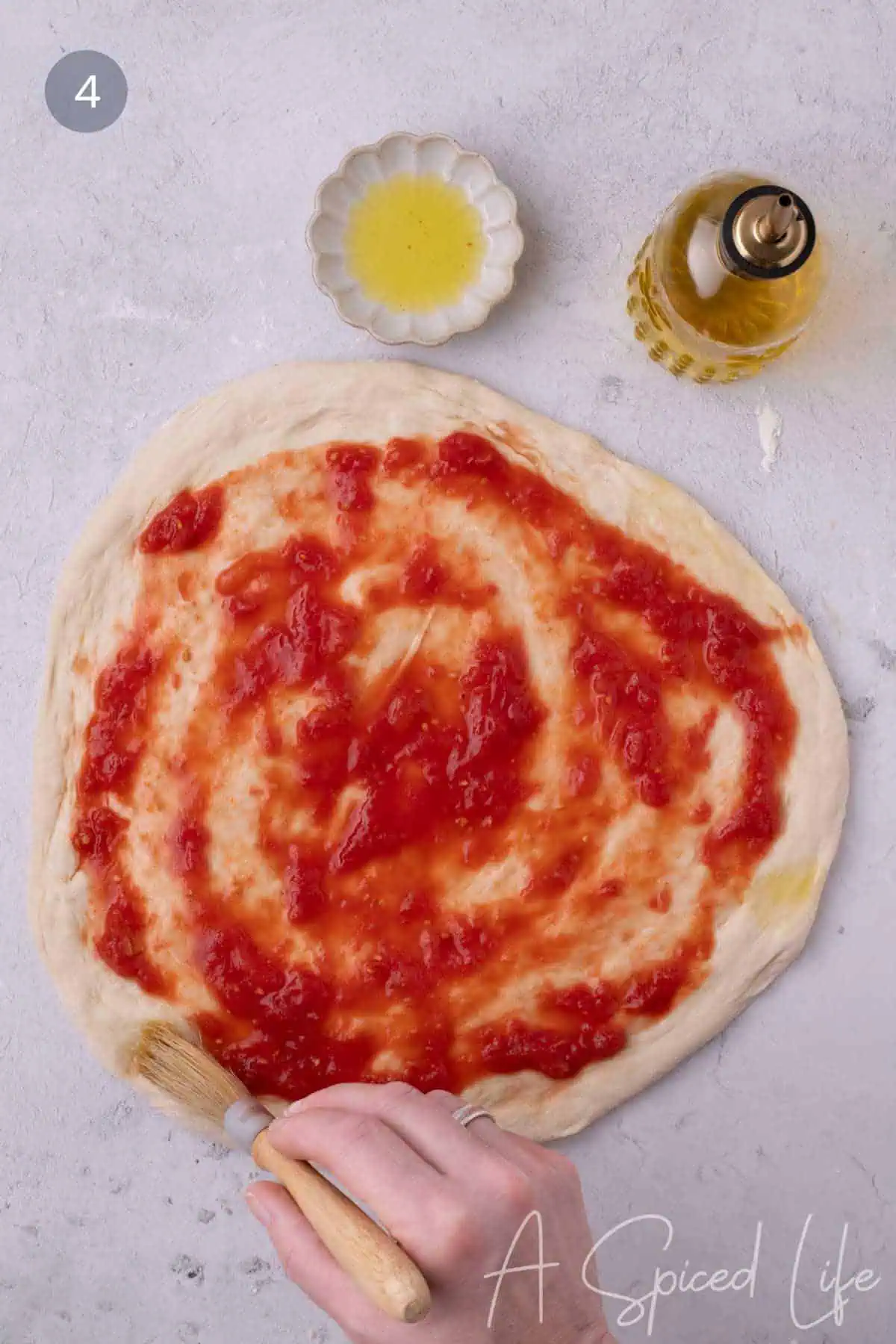
4. Spread a thin layer of crushed tomato sauce over the dough and brush lightly with olive oil *see note below about using olive oil.
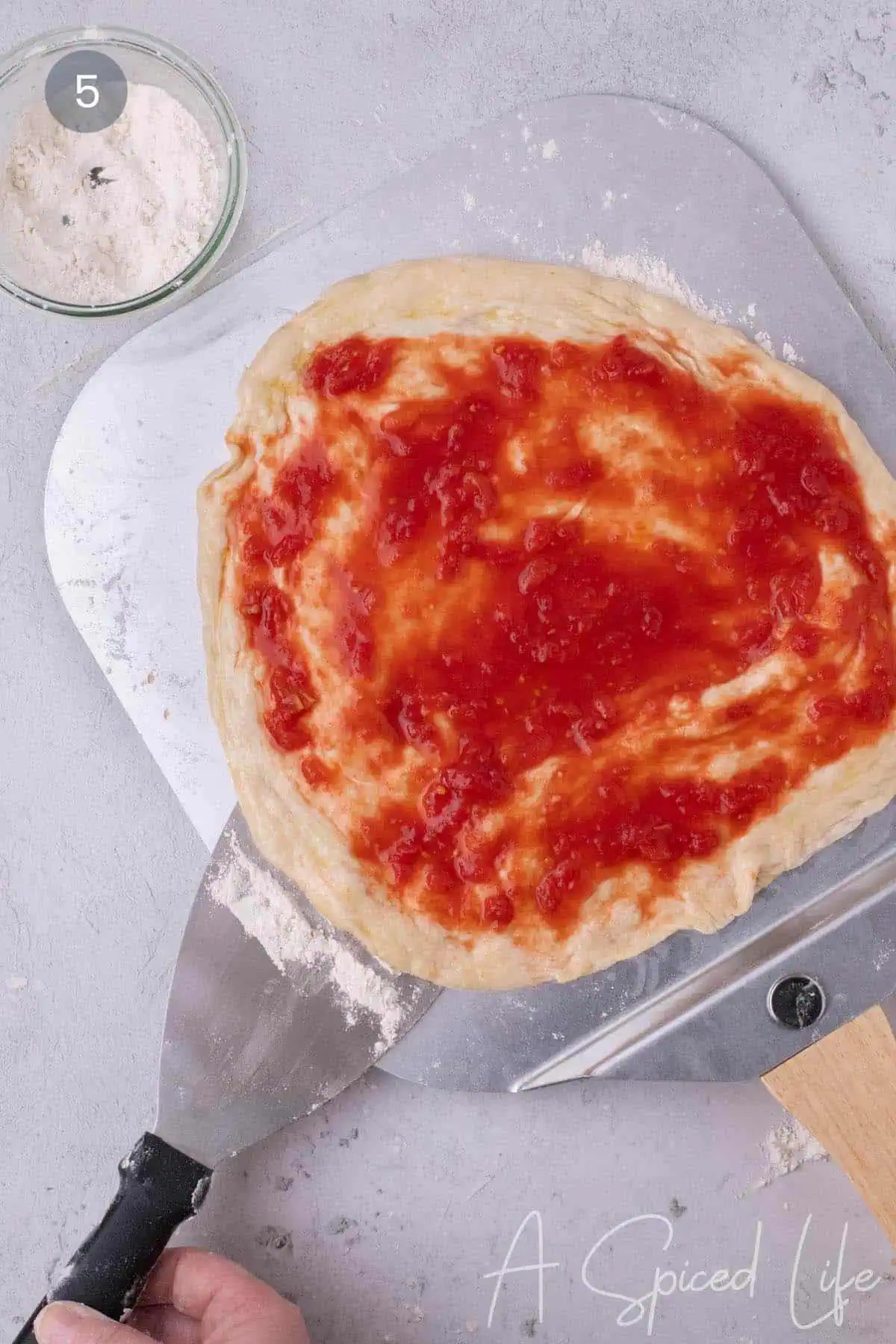
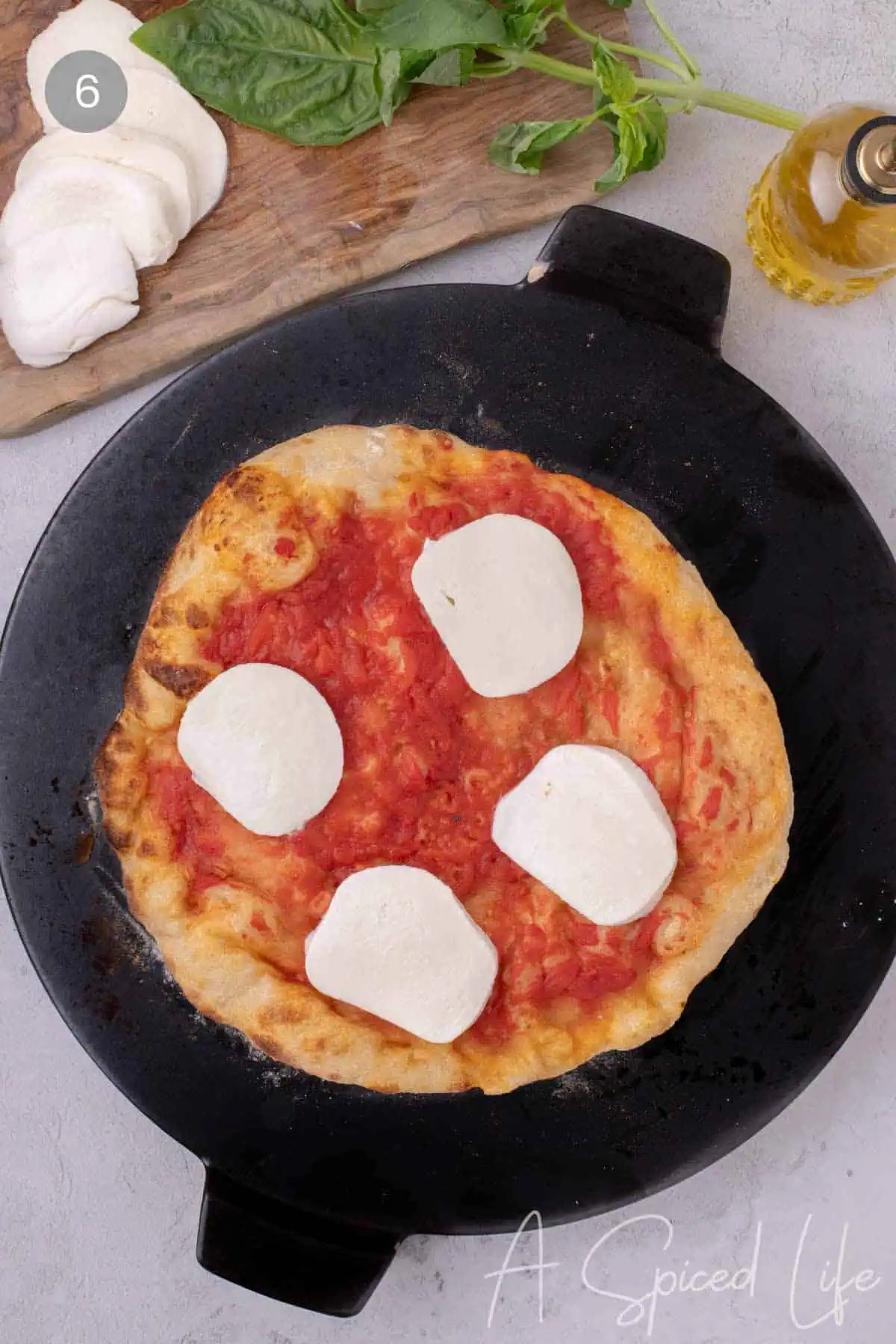
5. Transfer the pizza to a floured peel so it can slide easily into the hot oven. Parbake.
6. Top with fresh mozzarella and continue baking until the cheese has melted, and the crust has browned and is blistered in places.
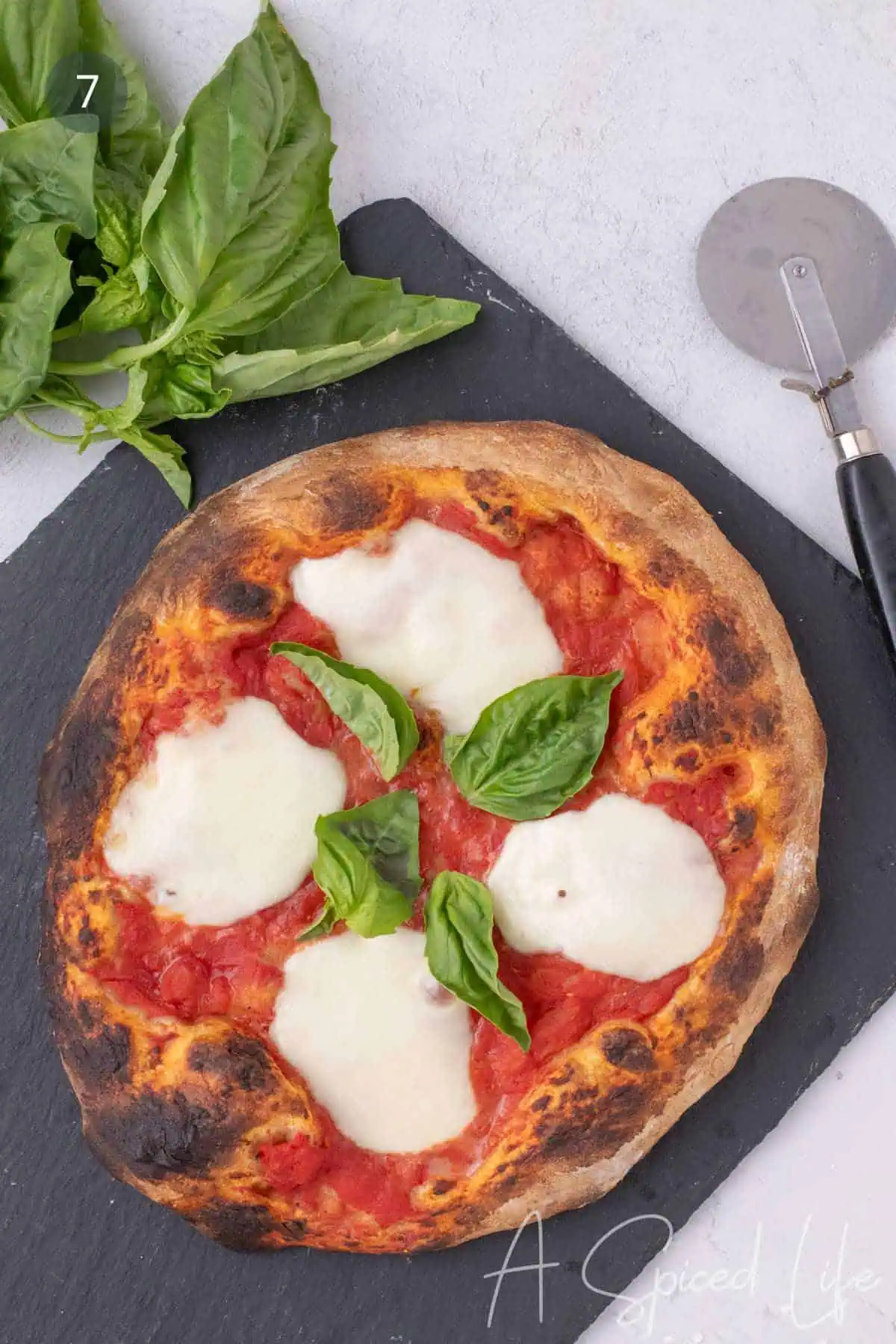
7. Top with fresh basil leaves for a classic Neapolitan-style Margherita pizza

Join my newsletter!
Subscribe and get a new recipe each week + my bonus guide: ‘5 Easy Baking Tips That Will Change the Way You Bake. Forever’……. Because Delicious Starts Here.
Why Does My Pizza Dough Keep Snapping Back When I Stretch It?
Pizza dough that keeps snapping back usually means the gluten is too tight. Gluten develops when dough is mixed and kneaded, giving the dough strength and elasticity. If the dough has been overworked and hasn’t had enough time to rest, those gluten strands stay tense and resist stretching.
Let the dough sit covered at room temperature for about 20–30 minutes, then try stretching it again. As the dough rests, the gluten relaxes, making it much easier to stretch into a thin pizza crust.
Things to Know About Neapolitan-Style Pizza
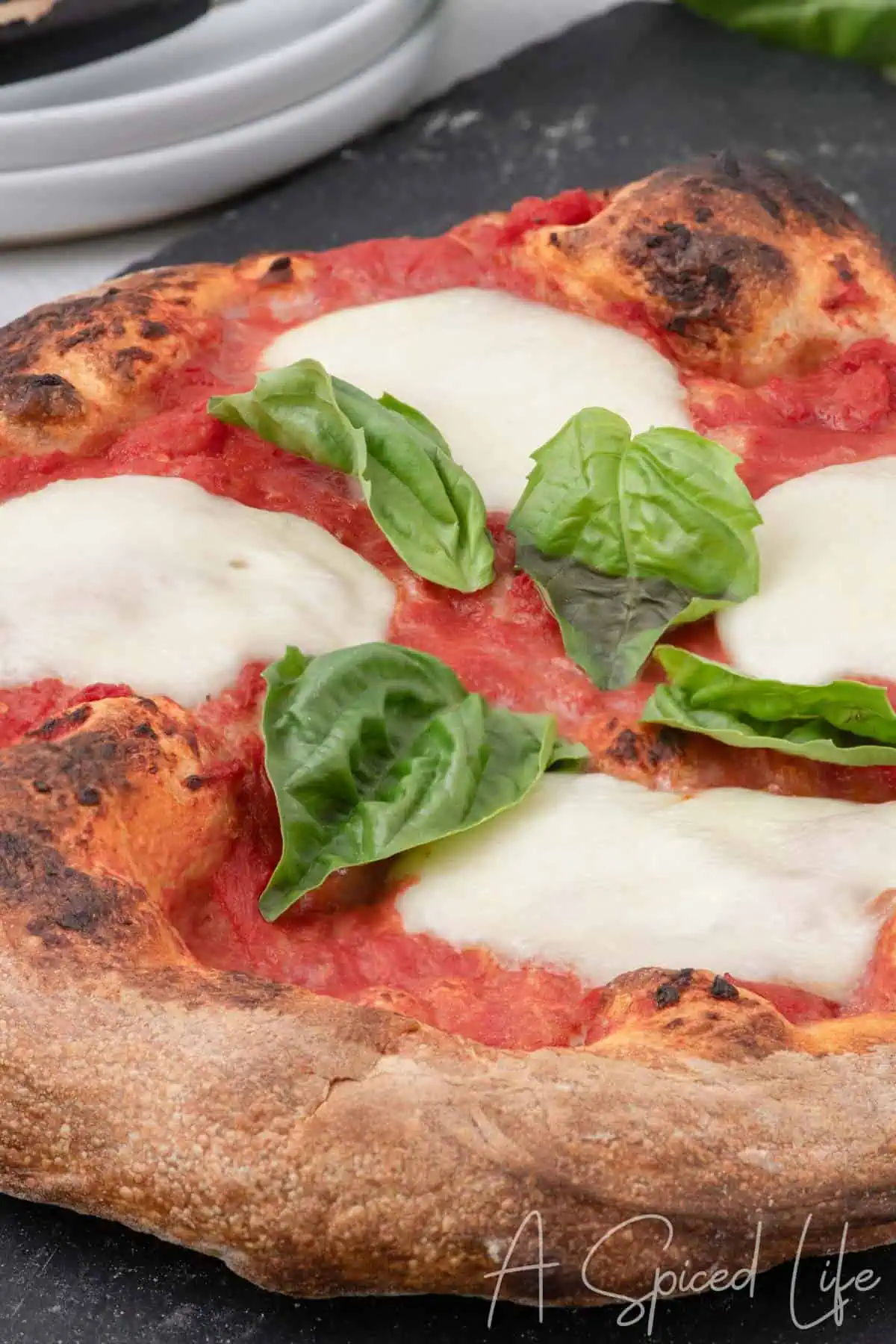
- Texture: The center should be thin and soft while the thick outer edge or ‘cornicione’ becomes light and airy.
- Origin: Traditional Neapolitan pizza comes from Naples, Italy, and is typically baked in wood-fired ovens.
- Most Common Beginner Mistake: Adding too much sauce or topping can prevent the dough from baking properly.
Expert Tips for Better Pizza at Home
- Stretch the dough by hand instead of using a rolling pin. This way, you don’t deflate all the bubbles created during proofing. See this full guide on getting the best texture from your store-bought pizza dough ball.
- Bake on a very hot pizza stone (or in a cast iron pan) if you don’t have one.
- Let the Dough Come to Room Temperature. Cold dough tends to snap back and resist stretching, while room-temperature dough relaxes and becomes much easier to shape into a thin crust without tearing.
- Make sure the pizza moves freely on the peel. If the pizza doesn’t slide on the peel, it won’t slide off onto the hot pizza stone. After transferring the pizza to the floured peel, give it a gentle shake to make sure it slides easily. If it doesn’t move, slide a flour-coated pizza spatula underneath to loosen it. Use this same method if your pizza dough sticks to the counter. On that note: Once you have added the sauce to the pizza, quickly transfer it to the pizza peel to prevent it from sticking to the counter.
- Use less sauce than you think. About 3–4 tablespoons of tomato sauce is usually enough. The tomato sauce should be light enough that you can still see the dough through it. (As a side note: too much sauce can weigh down the dough and lead to a soggy crust).
- Brush olive oil lightly around the edges of the dough if your oven only goes to 450° to 500°F or doesn’t have a convection bake setting. This will help promote browning of the crust.
- Reshape the pizza if it loses its rounded shape. Sometimes the dough can stretch unevenly when transferring it to the pizza peel. If that happens, gently nudge it into shape with your hands.
Make Ahead and Storage Info
Leftovers: Place any leftovers in a zippered freezer bag in the refrigerator for up to 4 days, or in the freezer for up to 3 months.
To Reheat: Place thawed slices in a 300°F oven until warmed through. Do not microwave, as it will ruin the texture.
Recipe FAQs
Authentic Neapolitan pizza uses very little sauce. Since the center of the pizza is traditionally very thin, too much moisture can weigh down the dough and prevent the underside of the crust from cooking properly. Using a thin layer allows the dough to rise quickly in the oven and develop the classic airy structure.
Bake pizza at the highest temperature your oven allows (usually 450–550°F). A hot baking surface helps mimic the intense heat of a traditional pizza oven, giving you that nice light crust and browned blistered edges.
Pizza dough snaps back when the gluten is too tight. If you have overworked your dough, let it rest for 20 to 30 minutes to allow the gluten to relax so the dough can stretch more easily.
Delicious Starts Here
If you make this recipe, I’d love to hear how it turned out. Please leave a rating and a comment below; your feedback helps other home cooks decide if this recipe is right for them. And if you share it on Instagram, tag me @aspicedlifeblog so I can see your beautiful creations.🧡
Pizza From Store-Bought Dough (Neapolitan-Style)
Ingredients
- 1 (16-ounce) ball store-bought pizza dough
- 1 (28-ounce) can San Marzano tomatoes
- 1 tablespoon kosher salt
- 2 teaspoons extra virgin olive oil
- 1 (8-ounce) ball Fior di Latte or other fresh mozzarella
Instructions
- Remove the pizza dough from the refrigerator about 2 hours before baking and prepare it according to these dough-handling instructions.
- Place a pizza stone in a cold oven and preheat it to 550°F on convection bake. If your oven does not reach 550°F or does not have convection, set it to the highest temperature available.
- Shape and stretch the dough to about 15 inches in diameter (or the size of your pizza stone) and place it on a lightly floured surface.
Prepare the Tomato Sauce
- Empty the can of San Marzano tomatoes (with their liquid) into a medium bowl.
- Crush the tomatoes by hand and stir in the salt.
- Spread a thin layer of sauce over the dough, leaving 1½ inches around the edge for the crust. You should still be able to see the dough underneath. (You will only need about 3–4 tablespoons of sauce).
- If your oven only reaches 450–500°F, lightly brush olive oil around the outer rim of the dough to help the crust brown.
- Transfer the sauced pizza to a lightly floured pizza peel and slide it onto the hot pizza stone.
- Bake for about 5 minutes, then check the underside of the crust. It should be lightly golden and slightly firm.
- Remove the pizza from the stone and add the mozzarella.
- Return the pizza to the oven and bake until the cheese melts and the crust develops dark brown, blistered edges.
- Remove from the oven, add fresh basil, and let the pizza rest about 5 minutes before slicing.
Notes:
Nutrition

If you’re just getting started making pizza at home, start with my full guide on How to Make Incredible Pizza with Store-Bought Dough (Like the Pros). It walks you through techniques for stretching dough by hand, creating a light, airy crust, and baking pizza in a home oven for pizzeria-style results.
Once you’ve mastered the dough, this Neapolitan-style Margherita pizza is one of the easiest and most rewarding ways to use it.







This is such an easy way to get authentic-tasting Margherita Pizza made at home.
Oh wow, this was amazing! Loved how simple it was, and so much flavor. Thank you!
That’s so great to hear, simple with lots of flavor is exactly the goal with this one.
I’m glad this pizza worked well for you.